
-
Feed Buffering: Tailings are uniformly fed via an ore bin and an electromagnetic vibrating feeder, ensuring stable feed rate and pulp density — critical requirements for gravity separation performance.
-
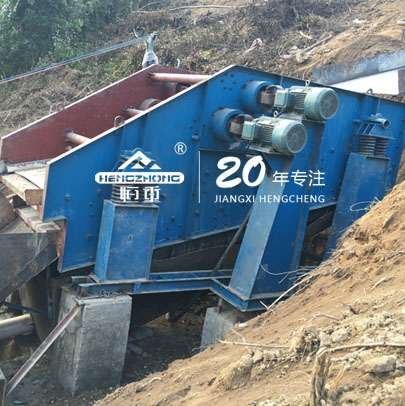
2 mm Screening and Discarding: Material reports to a vibrating screen with 2 mm apertures. Oversize coarse gangue is discarded directly, while undersize slurry proceeds to the next stage. The 2 mm cut represents an engineering balance between "early waste rejection" and "avoiding over-comminution."
-
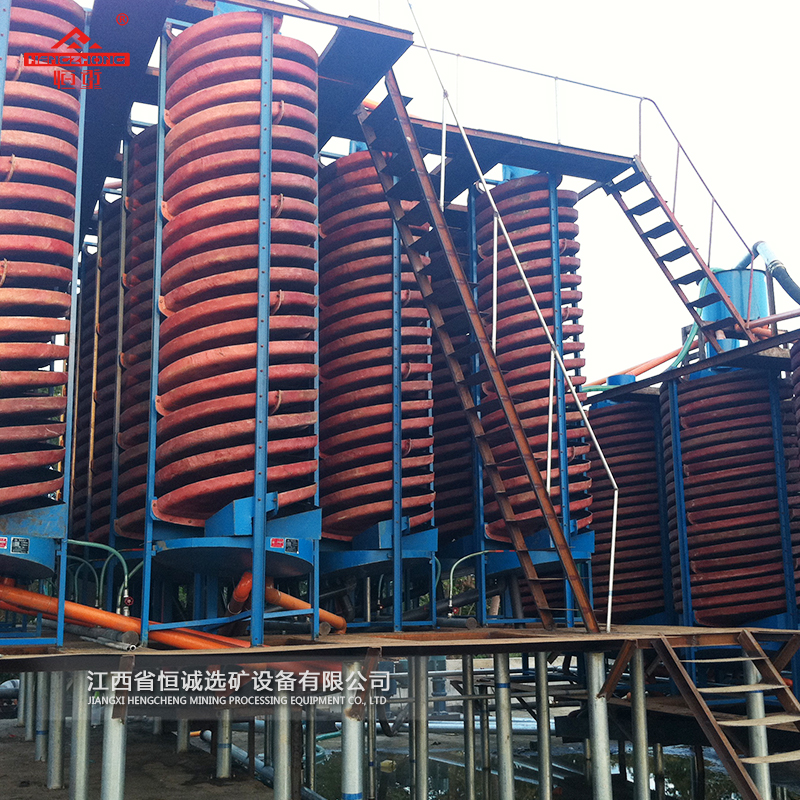
Multi-Stage Spiral Chute Upgrading: The slurry is pumped to spiral chutes. Utilizing the density difference between chromite (approximately 4.0–4.6 g/cm³) and gangue (2.6–2.8 g/cm³), heavy minerals are concentrated toward the inner edge of the spiral. Through multiple stages of roughing and cleaning, the grade is progressively raised above 40%.
-
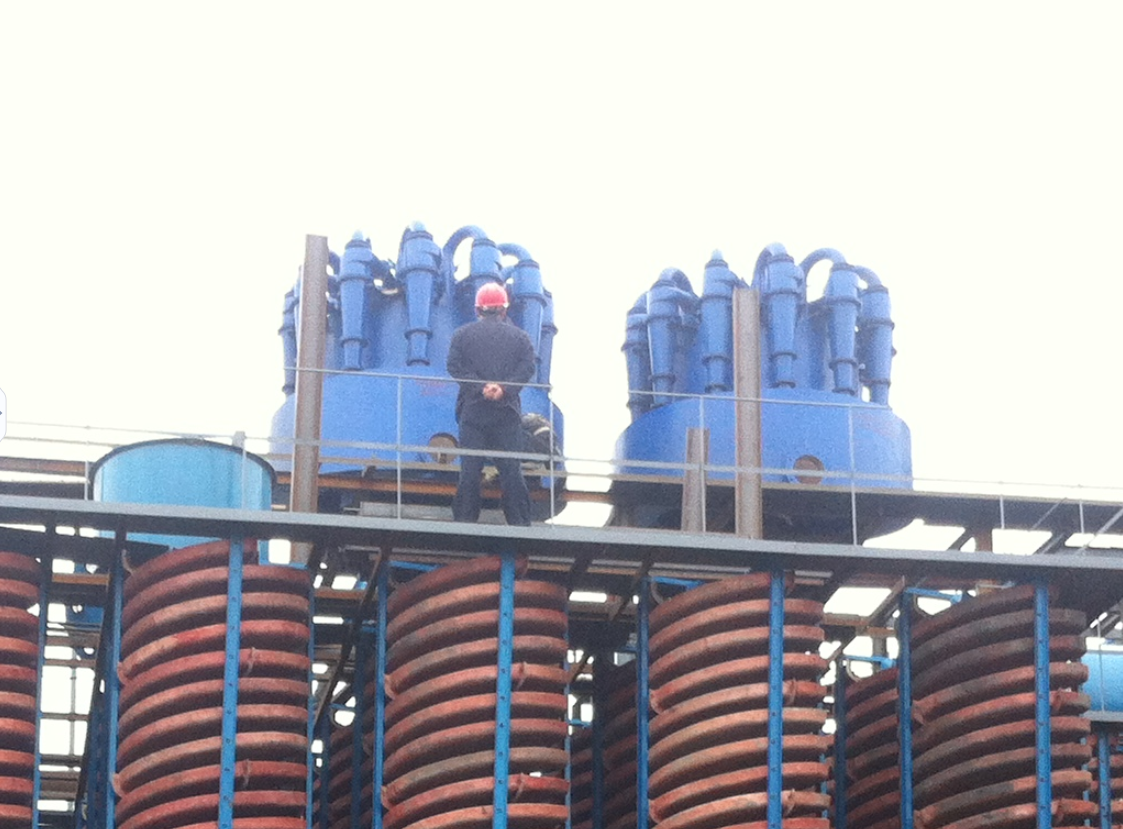
Hydrocyclone Dewatering: The upgraded slurry enters a hydrocyclone. The underflow constitutes the final chromite concentrate, while the fine slime overflow is directed to separate water treatment.
"Tailoring Separation to the Ore": Magnetic Separation as an Optional Step
It is worth noting that while spiral chutes are highly effective at separating chromite from gangue, they have limited ability to distinguish chromite from associated magnetite, as the two minerals have similar densities. Therefore, if on-site assays indicate elevated iron content in the concentrate (affecting the Cr/Fe ratio), a low-intensity magnetic separation step can be added after the spiral chutes to remove strongly magnetic magnetite. This not only further elevates chromite grade and improves the Cr/Fe ratio but also allows magnetite to be recovered as a by-product. This step is optional and should be configured according to actual ore properties.
Applicability Boundaries and Engineering Takeaways
The success of this short flowsheet rests on three preconditions: a distinct density difference, liberation below 2 mm, and tailings that have not slimed. If the ore has a finer dissemination size or has undergone severe sliming, grinding or hydraulic classification must be introduced. This case demonstrates that for suitable materials, a short gravity flowsheet can achieve efficient upgrading — but representative ore sampling and small-scale bench testing remain an indispensable step before full-scale engineering.